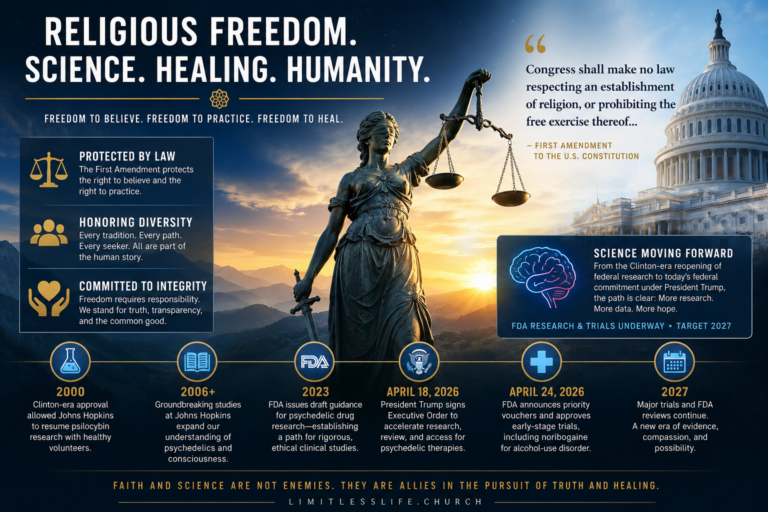
Religious freedom is not reserved for familiar churches, traditional denominations, or beliefs that make the majority comfortable. It belongs to everyone. The First Amendment protects both the right to believe and the right to exercise one’s religion. That protection extends beyond private thoughts or Sunday-morning worship. Religious exercise may include ceremonies, observances, community practices, and physical acts rooted in sincere spiritual conviction. At the same time, religiously motivated conduct can still be regulated when the government can demonstrate legitimate concerns involving public safety or other significant interests.
That tension is exactly why religious freedom matters. A freedom that protects only popular beliefs is not freedom at all. It is permission granted by the majority.
Freedom Includes the Unfamiliar
Every established religious tradition was once new to someone. Its language sounded unfamiliar. Its ceremonies looked unusual. Its leaders challenged accepted ideas, and its followers were often mocked, feared, punished, or misunderstood. The government is not supposed to decide which theology is correct, which spiritual experience is valid, or which religious tradition deserves to exist. Religious-liberty protections are not limited to practices that outsiders consider mandatory, logical, central, or reasonable. What matters is whether the belief and practice are sincerely held, not whether government officials personally understand or agree with them.
Religious freedom means a Catholic may receive the Eucharist, a Jewish family may observe the Sabbath, a Muslim may answer the call to prayer, an Indigenous believer may honor an ancestral ceremony, and an emerging spiritual community may develop sincere practices that do not resemble conventional American Christianity. The law should not favor one denomination simply because it is older, larger, wealthier, or more politically connected.
Religious Freedom Is Not Automatic Immunity
Religious freedom is powerful, but it is not a legal cheat code. Calling an organization a church does not automatically exempt it from every law. Filing nonprofit documents does not transform ordinary commercial activity into religious exercise. Adding spiritual language to a practice does not prevent courts or government agencies from examining what is actually happening. Sincerity must be demonstrated through more than branding. A sincere religious community should be able to show consistent beliefs, established practices, responsible leadership, honest governance, meaningful membership, financial integrity, and a genuine spiritual purpose. Religious freedom should never be used to conceal exploitation, reckless conduct, fraud, abuse, or ordinary commerce disguised as ministry. Freedom requires responsibility.
What RFRA Actually Does
The federal Religious Freedom Restoration Act, commonly called RFRA, provides heightened protection when the federal government substantially burdens a person’s exercise of religion. Under RFRA, the federal government must show that the burden serves a compelling governmental interest and that it is using the least restrictive means available. RFRA may be raised as either a legal claim or a defense. That is a significant protection, but it does not guarantee that every religious claimant will win. Courts examine the specific practice, the sincerity of the religious exercise, the burden being imposed, the government’s stated interest, the risks involved, and whether a less restrictive alternative is realistically available.
Federal RFRA generally applies to federal government action. State and local cases may involve different constitutional protections, state religious-freedom laws, or other legal standards. In other words, religious-liberty cases are highly fact-specific. There is no universal form, certificate, disclaimer, or collection of legal phrases that guarantees protection.
Sacramental Practice and the Law
The Supreme Court’s decision in Gonzales v. O Centro Espírita Beneficente União do Vegetal is one of the most important modern religious-freedom cases involving sacramental practice.
The case involved a small religious community whose communion ceremony included a tea containing DMT. The federal government attempted to prohibit the practice under the Controlled Substances Act. The Supreme Court upheld a preliminary injunction because the government had not met its burden under RFRA based on the specific facts and evidence presented.
That ruling did not legalize every sacramental substance, protect every church claiming religious use, or create an automatic exemption from controlled-substance laws. It established something more precise: the government must evaluate the specific religious claimant and cannot always prevail by relying only on broad statements about enforcing the law. That distinction matters.
Religious liberty is neither automatic prohibition nor automatic permission. It requires a careful examination of sincerity, burden, risk, government interest, and possible accommodation.
Our Commitment
At Limitless Life Church, we believe religious freedom must be approached with both courage and integrity. We will not apologize for sincere spiritual conviction simply because it is unfamiliar. We will also not treat religious liberty as an excuse to abandon accountability.
Our commitment is to clear theology, responsible governance, informed consent, age requirements, ethical leadership, accurate records, financial transparency, community standards, spiritual preparation, and meaningful integration. We believe sacred practices should produce recognizable fruit: love rather than superiority, healing rather than exploitation, responsibility rather than recklessness, freedom rather than dependency, and community rather than control.
Religious freedom protects the right to pursue the sacred. It does not remove the responsibility to protect people.
Freedom Requires Vigilance
Religious liberty has always required people willing to defend it, not only for themselves, but also for people whose beliefs they may not share.
We cannot demand freedom for our traditions while denying it to everyone else. We cannot ask the government to respect our conscience while using power to violate another person’s conscience. Freedom must be principled, or it becomes privilege.
At Limitless Life Church, we believe the Creator is not threatened by questions, discovery, spiritual exploration, or the expansion of human understanding. Our faith may not look familiar to everyone, and it does not need to.
Religious freedom exists because no government, institution, denomination, or cultural majority should possess exclusive ownership over humanity’s search for the divine.
Religious freedom is not a loophole. It is a liberty and liberty must be practiced responsibly, defended courageously, and extended equally.
This article provides general educational information about religious-liberty principles and does not constitute legal advice.